1. Market Reality Check: The Conversation Intelligence Boom
Over the past decade, sales organizations have undergone a quiet but fundamental shift. Conversations, once ephemeral moments between reps and prospects, have become one of the most valuable sources of revenue insight. As buying cycles lengthened, stakeholders multiplied, and competition intensified, leaders needed more than CRM notes and gut instinct. They needed visibility into what was actually happening in sales calls and meetings.
Conversation intelligence emerged to meet that need. Early tools focused on basic call recording, primarily for compliance or quality assurance. Over time, these tools evolved into sophisticated platforms capable of transcribing conversations, surfacing keywords, identifying patterns, and tying call behavior to pipeline outcomes. Gong quickly rose to prominence in this landscape, positioning itself as the system of record for revenue conversations.
For many teams, Gong represented a breakthrough. Suddenly, sales leaders could review deals without sitting in on calls. Enablement teams could analyze objections at scale. Revenue operations teams could correlate language patterns with win rates. The promise was compelling: better data would lead to better decisions, stronger coaching, and more predictable revenue.
However, as conversation intelligence became ubiquitous, expectations shifted. Recording and analyzing calls became table stakes. The competitive advantage moved from visibility to impact. Leaders began asking harder questions. Are reps actually changing behavior? Are insights translating into better execution? Is the platform driving measurable improvement, or simply producing more dashboards?
By 2024, nearly every mid-market and enterprise sales organization had some form of conversation intelligence in place. At the same time, budgets tightened, scrutiny increased, and tools were forced to justify their cost. In this new reality, being the most well-known platform was no longer enough. Sales teams began reassessing whether their conversation intelligence investments were delivering the outcomes they originally envisioned.
This reassessment did not signal a rejection of conversation intelligence as a category. Rather, it reflected a maturation of buyer expectations. Sales leaders no longer wanted tools that simply told them what happened. They wanted systems that helped reps perform better in the moment and helped teams execute consistently across deals. This shift set the stage for a growing reconsideration of legacy platforms and opened the door for cost-effective, execution-focused alternatives.
2. The Hidden Cost of Conversation Intelligence
When evaluating conversation intelligence platforms, most buyers focus first on licensing costs. Per-seat pricing, minimum contract sizes, and annual commitments are easy to quantify. Yet the true cost of these platforms extends far beyond subscription fees. Over time, many sales teams discover that the hidden operational costs can outweigh the perceived benefits.
One of the highest hidden costs is time. Conversation intelligence platforms generate an enormous volume of data: transcripts, tags, scorecards, insights, and alerts. While this data is valuable in theory, it requires substantial effort to interpret and act on. Managers must review calls, enablement teams must curate insights, and operations teams must maintain integrations and dashboards. The burden of extracting value often falls on a small group of power users, while the broader sales team remains largely passive.
There is also a cognitive cost for reps. Many platforms surface insights after the fact, asking reps to review feedback days or weeks later. In fast-moving sales environments, this delayed coaching often competes with active deals and immediate priorities. As a result, insights are acknowledged but not internalized, leading to limited behavior change.
Another cost emerges in the form of enablement debt. When insights are plentiful but guidance is scarce, teams accumulate knowledge without reinforcement. Objection patterns are identified, but reps are not consistently equipped with the right responses at the right time. Best practices are documented, but they live outside the rep’s workflow. Over time, organizations invest heavily in analysis while underinvesting in execution support.
Financial leaders also scrutinize return on investment. As budgets tighten, tools that deliver indirect or long-term value face greater skepticism. If a platform requires significant manual effort to translate insights into action, its ROI becomes harder to defend. This is especially true for organizations that lack dedicated enablement or analytics resources.
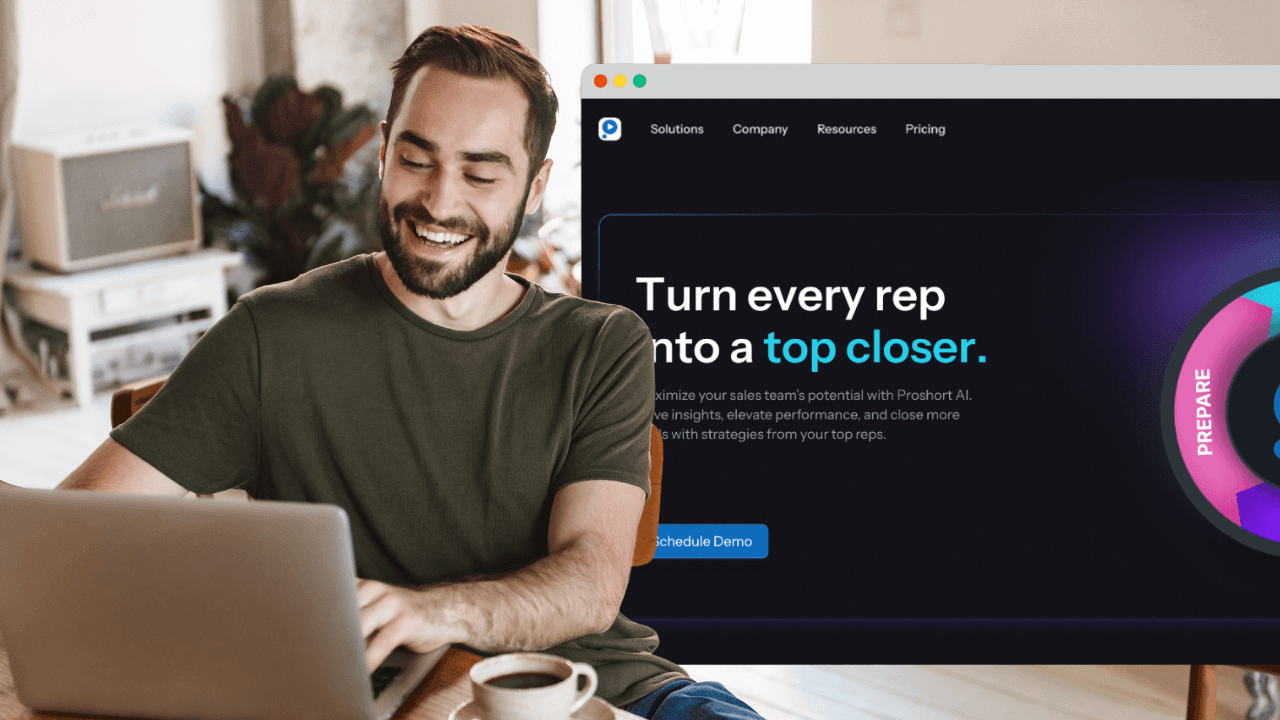
Cost-effective alternatives like Proshort address this challenge by narrowing the focus. Instead of optimizing for maximum insight generation, they prioritize actionable guidance within the flow of work. By reducing the operational overhead required to extract value, these tools lower the true cost of ownership and make performance improvement more accessible across the organization.
3. Adoption Is the Real Problem (Not Technology)
In conversations with sales leaders, a common theme emerges: the technology works, but adoption lags. This gap is rarely due to poor functionality. Instead, it stems from a mismatch between how tools are designed and how sales teams actually operate.
Most conversation intelligence platforms are manager-centric. They assume that managers will review calls, identify coaching moments, and relay feedback to reps. While this approach can be effective in small teams, it struggles to scale. Managers are busy, spans of control are wide, and coaching time is limited. As a result, only a fraction of recorded conversations receive meaningful review.
For reps, the experience is often passive. Calls are recorded automatically, insights are generated in the background, and feedback arrives asynchronously. Without immediate relevance, reps may view the platform as something done to them rather than something done for them. This perception undermines engagement and limits behavior change.
Another adoption challenge lies in timing. Learning science consistently shows that feedback is most effective when delivered close to the moment of action. Post-call analysis, while useful for reflection, is less effective for shaping in-call behavior. By the time a rep reviews feedback, the next call may involve a different prospect, context, or challenge.
Proshort approaches adoption from a different angle. By embedding guidance directly into the rep’s workflow, it shifts coaching from retrospective analysis to real-time support. Instead of asking reps to remember lessons from past calls, it reinforces best practices when they are most needed. This design philosophy reduces friction and increases the likelihood that insights translate into action.
Ultimately, adoption is not about feature breadth. It is about relevance, timing, and ease of use. Tools that respect the realities of sales work are more likely to drive consistent engagement and measurable improvement.
4. The Shift from Revenue Intelligence to Execution Intelligence
Revenue intelligence promised to connect activities to outcomes, providing leaders with a clearer view of pipeline health and forecast risk. While this promise has largely been fulfilled, it has also revealed a limitation. Knowing what happened does not automatically change what will happen next.
Execution intelligence represents the next evolution. Rather than focusing solely on analysis, it emphasizes guidance, reinforcement, and decision support. The goal is not just to explain outcomes, but to influence them.
In practice, this shift manifests in several ways. First, insights are delivered closer to the point of action. Instead of summarizing call performance after the fact, execution intelligence tools highlight what a rep should do next. Second, guidance is contextual. Recommendations are tailored to deal stage, persona, and situation, rather than generic best practices. Third, reinforcement is continuous. Learning is embedded into daily workflows, reducing reliance on formal training sessions.
This approach aligns closely with how high-performing teams operate. Top reps do not rely on dashboards to tell them what to do. They internalize patterns and apply them instinctively. Execution intelligence aims to accelerate this process for the broader team.
Proshort exemplifies this shift by focusing on contextual coaching and in-flow enablement. Rather than positioning itself as a comprehensive revenue analytics platform, it targets the execution gap that often exists between insight and action. This focus resonates with teams that have already invested in visibility and are now seeking tangible performance gains.
As the market matures, the distinction between revenue intelligence and execution intelligence becomes increasingly important. Tools that fail to evolve risk becoming expensive reporting layers, while those that enable action gain strategic relevance.
5. What Sales Teams Actually Need in 2026
By 2026, the expectations placed on sales teams are higher than ever. Buyers are more informed, competition is fierce, and internal pressure for efficiency is relentless. In this environment, sales teams need tools that support execution, not just analysis.
First, reps need confidence. This confidence comes from knowing what to say, when to say it, and how to respond to objections. Static playbooks and post-call reviews are insufficient. Guidance must be timely and contextual.
Second, teams need consistency. Variability in execution leads to unpredictable outcomes. Tools that reinforce best practices across deals help reduce this variability and improve forecast reliability.
Third, managers need leverage. With limited time, they require systems that scale coaching and reduce reliance on manual review. Execution-focused tools enable managers to influence behavior without constant intervention.
Fourth, organizations need efficiency. Administrative overhead detracts from selling time. Tools that integrate seamlessly with CRM systems and reduce manual effort deliver immediate value.
Finally, leaders need accountability. While qualitative insights are useful, they must tie back to measurable outcomes. Execution intelligence should complement existing analytics, not replace them.
Cost-effective platforms like Proshort address these needs by prioritizing execution support over exhaustive analysis. By aligning with the realities of modern sales work, they offer a pragmatic path to performance improvement.
6. Why Cost-Effective Alternatives Are Gaining Ground
The growing interest in cost-effective alternatives is not driven solely by budget cuts. It reflects a broader reevaluation of value. Sales teams are increasingly selective, favoring tools that deliver clear, immediate benefits.
One reason is the faster time to impact. Large platforms often require lengthy onboarding, customization, and change management. In contrast, focused tools can be deployed quickly and adopted with minimal disruption.
Another factor is clarity of purpose. When a platform tries to serve too many use cases, its value proposition can become diluted. Cost-effective alternatives often succeed by doing fewer things exceptionally well.
There is also a cultural shift at play. Sales organizations are moving away from tool accumulation toward intentional stack design. Each tool must justify its place by addressing a specific problem.
Proshort benefits from this shift by positioning itself as a targeted solution for execution and enablement. Rather than competing head-on with full-scale revenue intelligence platforms, it complements or replaces them where execution support is lacking.
As buyers become more discerning, cost-effectiveness is increasingly defined by outcomes rather than price alone.
7. The Rise of Contextual Coaching and In-Flow Enablement
Traditional sales training has long struggled with retention. Reps attend workshops, absorb information, and return to their desks only to revert to old habits. Contextual coaching addresses this challenge by delivering learning at the moment of need.
In-flow enablement integrates guidance directly into the tools reps already use. This approach reduces friction and reinforces learning continuously. Over time, it helps build muscle memory and confidence.
Proshort’s emphasis on contextual coaching reflects this philosophy. By aligning guidance with real deals and real conversations, it bridges the gap between training and execution. This model supports ongoing development without overwhelming reps.
As sales cycles become more complex, the ability to deliver relevant guidance in context becomes a competitive advantage.
8. Where Gong Still Wins
Despite growing interest in alternatives, Gong remains a powerful platform. Its strengths are particularly evident in large, complex organizations.
Gong excels at aggregating data across teams, providing leadership with a unified view of revenue activity. Its analytics support forecasting, pipeline reviews, and strategic planning. For organizations with dedicated enablement and operations resources, Gong’s depth can be a significant asset.
Additionally, Gong’s market presence and ecosystem integrations make it a safe choice for enterprises seeking standardization.
Acknowledging these strengths is important. The decision to explore alternatives is not a rejection of Gong’s capabilities, but a recognition that different teams have different needs.
9. When Teams Outgrow Gong
There are clear signals that a team may have outgrown its current approach. Rising costs without corresponding gains, declining rep engagement, and persistent execution gaps all point to misalignment.
When insights accumulate without action, leaders should reassess whether their tools support behavior change. In many cases, augmenting or replacing existing platforms with execution-focused solutions can restore momentum.
Proshort is often adopted in these moments, addressing specific gaps without requiring a complete overhaul.
10. A New Model: Execution-First Sales Enablement
Execution-first enablement prioritizes action over analysis. It recognizes that insight is only valuable if it changes behavior. This model integrates coaching, guidance, and reinforcement into daily workflows.
Proshort embodies this approach by focusing on what reps need to do next, not just what happened before. Aligning enablement with execution, it helps teams move from understanding to performance.
11. Final Takeaway
Sales teams are not abandoning conversation intelligence. They are refining it. As expectations rise and budgets tighten, tools must deliver tangible impact.
Gong remains a leader, but it is no longer the default choice for every team. Cost-effective, execution-focused alternatives like Proshort offer a compelling path forward for organizations seeking measurable improvement.
The future of sales enablement lies in bridging the gap between insight and action. Teams that embrace this shift will be better positioned to compete in an increasingly demanding market.