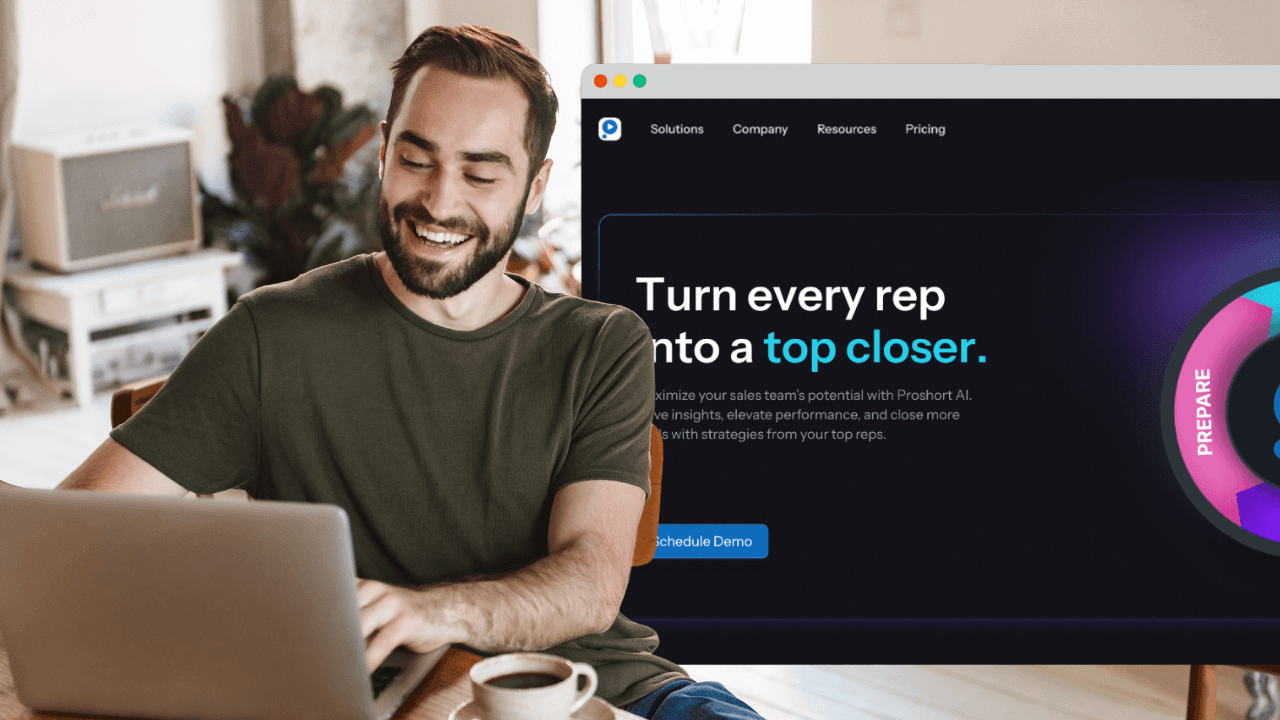
Sales conversations are no longer just conversations. They’ve become one of the richest sources of revenue intelligence, forecasting accuracy, product feedback, and coaching leverage. Over the last few years, tools like Gong have helped bring that shift into the mainstream, making call recording and analysis standard across modern sales teams.
But as the market has matured, so have buyer expectations.
In 2025, revenue leaders are no longer just asking:
“Can this tool record our calls?”
They are now asking:“Can this tool change rep behavior?”
“Will it improve deal execution?”
“Does it reinforce coaching inside real workflows?”
“Will our reps actually adopt it?”
That evolution is why many teams are now actively evaluating Gong alternatives, not because Gong is ineffective, but because sales organizations differ widely in size, motion, enablement maturity, budget, and execution needs.
This guide breaks down the 12 best Gong alternatives in 2026, with a practical, buyer-oriented lens. You’ll learn:
Where each tool is strongest
What use cases does it truly fit
When it’s a better choice than Gong
And where its limitations show up
Why Teams Search for Gong Alternatives
Conversation intelligence has become foundational, but teams outgrow tools at different stages. The reasons buyers explore alternatives are often practical, not competitive or ideological.
Here are the most common drivers:
1. Teams Want Execution, Not Just Insights
Many tools surface risks and insights after calls. Increasingly, teams want real-time or in-flow guidance that alters rep behavior while deals are still active.
2. Enablement-First vs Revenue-Analytics-First Needs
Some organizations are coaching-centric (skills, talk tracks, onboarding). Others are forecasting-centric (deal health, pipeline risk). Few tools excel equally at both.
3. Rep Adoption Pressures
Heavy dashboards and manager-only value often create adoption friction at the rep level. Lightweight, context-driven platforms frequently win on usage.
4. Budget and Scale Considerations
What works at 1,000+ reps may be misaligned for 40–200 rep teams. Total cost of ownership matters more in 2025 than it did in growth-at-all-costs years.
5. Regional Data Compliance
Global teams face GDPR, data residency, and recording regulations that some platforms handle better than others.
How This List Was Built
These 12 Gong alternatives were selected based on:
Proven conversation intelligence or coaching workflows
AI-driven insights (not manual tagging only)
CRM integrations (Salesforce, HubSpot)
Rep adoption and workflow alignment
Strong enablement and execution of use cases
Each entry below follows the same structure for objective comparison.
1. Chorus (by ZoomInfo)
What it’s known for:
Chorus is one of the most established revenue intelligence platforms, deeply embedded in enterprise sales operations.
Core strengths vs Gong:
Tight CRM synchronization
Strong deal inspection workflows
Meeting-library intelligence across accounts
Robust manager-level analytics
Best for:
Enterprise sales teams with structured deal review cadences and RevOps ownership of forecasting.
Limitations:
Less real-time coaching during calls
Heavier admin setup
Adoption hinges strongly on manager usage
Key integrations:
Salesforce, Zoom, Outreach, Salesloft
When it’s a better choice than Gong:
When structured deal inspection and cross-account intelligence matter more than live execution nudges.
2. Avoma
What it’s known for:
Avoma blends meeting transcription, AI notes, and conversation insights in a rep-friendly package.
Strengths:
Clean meeting summaries
Lightweight setup
Strong collaboration workflows
Effective for product, CS, and sales together
Best for:
SMB to mid-market teams that want fast deployment and high rep adoption.
Limitations:
Less enterprise-grade revenue intelligence
Coaching frameworks are simpler than large platforms
Integrations:
Zoom, Salesforce, HubSpot, Google Meet
Better than Gong when:
You need speed, simplicity, and cross-team meeting visibility.
3. Salesloft Conversations
What it’s known for:
Native call intelligence inside the Salesloft engagement ecosystem.
Strengths:
Direct alignment with outbound workflows
Call insights tied to sequences
Centralized rep activity context
Best for:
Salesloft-centric outbound and SDR organizations.
Limitations:
Less flexible outside Salesloft
Reporting depth depends heavily on the engagement setup
Integrations:
Salesloft, Salesforce, Zoom
Better than Gong when:
Your outbound motion is heavily sequence-driven, and you want intelligence embedded directly into that workflow.
4. Outreach Kaia
What it’s known for:
Real-time call guidance and live coaching during meetings.
Strengths:
Live battlecards
Competitive prompts
Real-time objection support
Meeting assistance during active calls
Best for:
High-volume outbound and competitive deal environments.
Limitations:
Less emphasis on post-call coaching frameworks
Requires strong outreach process maturity
Integrations:
Outreach, Salesforce, Zoom, Teams
Better than Gong when:
You prioritize real-time deal assistance over post-call analytics.
5. Fireflies.ai
What it’s known for:
AI meeting transcription and searchable conversation memory.
Strengths:
Extremely fast setup
Works across internal and external meetings
Strong search and keyword tracking
Best for:
Early-stage teams, founders, cross-functional orgs
Limitations:
Limited structured sales coaching workflows
Not purpose-built for forecasting
Integrations:
Zoom, Teams, HubSpot, Salesforce
Better than Gong when:
You need broad organizational meeting intelligence, not only sales.
6. Jiminny
What it’s known for:
Balanced conversation intelligence with strong enablement overlays.
Strengths:
Rep scorecards
Coaching workflows
Call libraries for training
Performance benchmarking
Best for:
Enablement-led organizations in SMB and mid-market.
Limitations:
Less advanced enterprise forecasting workflows
Reporting is less granular at the deal level
Integrations:
Salesforce, HubSpot, Zoom
Better than Gong when:
Enablement outcomes matter more than board-level forecasting.
7. ExecVision
What it’s known for:
Conversation intelligence is tightly linked to structured coaching methodology.
Strengths:
Playbook-aligned coaching
Call scoring
Manager feedback workflows
Long-term rep performance tracking
Best for:
Sales organizations with a strong frontline coaching culture.
Limitations:
Less emphasis on predictive deal intelligence
UI is less modern than newer tools
Integrations:
Salesforce, Zoom, Teams
Better than Gong when:
You want coaching consistency over revenue-ops analytics.
8. Wingman (by Clari)
What it’s known for:
Real-time sales assistance and competitive insights during calls.
Strengths:
Live prompts
Deal risk detection
Rep confidence boosting
Competitive battlecard automation
Best for:
High-velocity sales teams working competitive mid-market deals.
Limitations:
Limited long-term call-library coaching compared to some platforms
Integrations:
Zoom, Salesforce, HubSpot
Better than Gong when:
You want real-time execution support inside live meetings.
9. Tactiq
What it’s known for:
Meeting transcription directly inside Chrome and collaboration tools.
Strengths:
No heavy deployment
Fast note capture
Cross-functional usability
Best for:
Startup and founder-led sales teams
Limitations:
Not designed for structured coaching or forecasting
Minimal analytics layer
Integrations:
Google Meet, Zoom, Slack
Better than Gong when:
You care about meeting documentation, not revenue intelligence.
10. Refract (by Allego)
What it’s known for:
Conversation intelligence layered with enablement and training.
Strengths:
Call-based learning
Objection handling libraries
Peer learning workflows
Best for:
Training-heavy sales organizations
Limitations:
Less revenue-insight depth
UI is less real-time execution-focused
Integrations:
Salesforce, Zoom
Better than Gong when:
Sales training is the core priority.
11. Modjo
What it’s known for:
Strong European conversation intelligence alternative.
Strengths:
GDPR-friendly architecture
Strong coaching analytics
Rep performance benchmarking
Best for:
EMEA-focused sales organizations
Limitations:
Smaller ecosystem than the US platforms
Integrations narrower
Better than Gong when:
Data residency and regional compliance drive the buying decision.
12. Proshort - Contextual Enablement & In-Flow Coaching
What it’s known for:
Proshort focuses on reinforcing behavior inside the flow of work, not just analyzing conversations after the fact.
Core strengths vs Gong:
Contextual guidance tied directly to real sales scenarios
In-flow coaching nudges instead of dashboard-only feedback
Enablement intelligence layered into daily execution
Reinforcement of talk tracks, objections, and deal strategies
Best for:
Enablement-led teams focused on:
Everboarding
Skills reinforcement
Reducing skill decay after training
Improving execution consistency
Limitations:
Not positioned as a traditional revenue intelligence forecasting engine
Designed more for execution and behavior change than board-level analytics
Integrations:
CRM systems, sales engagement tools, communication platforms
When it’s a better choice than Gong:
When your biggest performance gap is what reps do after calls, not only what happened inside them.
Categorizing the Alternatives by Use Case
Best for Enterprise Revenue Intelligence:
Chorus
Gong (if still retained as core)
Best for Real-Time Coaching:
Kaia
Wingman
Best for Enablement & Training:
Jiminny
ExecVision
Refract
Proshort
Best for Budget-Conscious Teams:
Fireflies
Tactiq
Avoma
Best for Compliance & Regional Teams:
Modjo
How to Choose the Right Gong Alternative
Instead of asking “Which tool is best?”, ask these questions:
Do we need real-time execution support or post-call analytics?
Is enablement driving this purchase—or RevOps?
What level of forecasting insight do we truly use?
Will reps see personal value inside their daily workflows?
Do managers need coaching tooling or deal inspection tooling?
Five-step selection framework:
Map your core revenue bottleneck
Identify rep vs manager ownership
Test adoption with a small pilot pod
Validate CRM data accuracy
Measure time-to-first-coaching impact
Where Conversation Intelligence Is Headed (2026–2028)
The market is rushing in four major directions:
From recording → real-time assistance
From dashboards → workflow nudges
From after-the-fact coaching → in-the-moment execution
From siloed platforms → embedded CRM intelligence
Future systems will:
Auto-generate deal strategies
Recommend next actions based on live buyer signals
Reinforce skills continuously without formal training sessions
Create organizational memory across accounts and reps
Final Takeaway
Gong remains a powerful revenue intelligence platform. But in 2026, power alone is no longer the deciding factor.
The best alternative depends on:
Your sales motion
Team size
Enablement maturity
Execution gaps
Forecasting requirements
For some teams, the right move is to invest in deeper revenue analytics.
For others, it’s real-time coaching.
And for enablement-led organizations, it’s about consistent behavior change in the flow of work.
The strongest teams don’t chase platforms; they solve specific execution problems with precision.