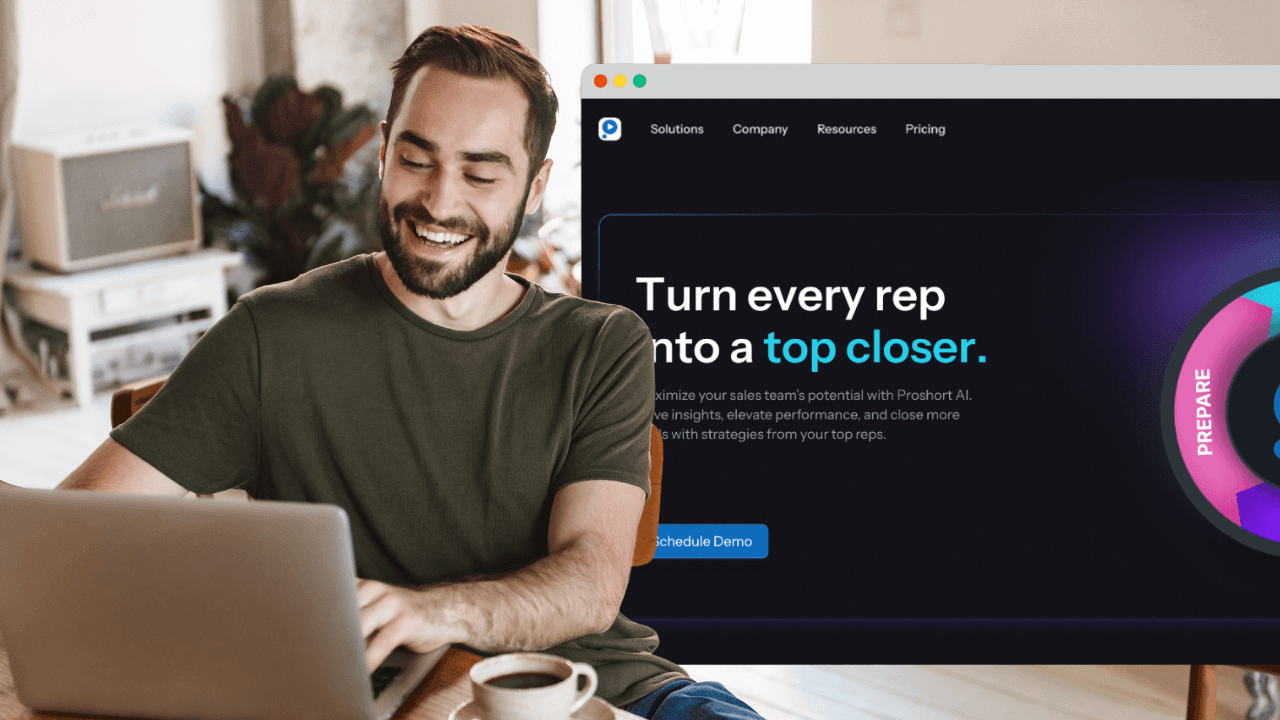
B2B sales teams are entering a new era.
For years, companies invested in CRMs, sales engagement platforms, forecasting software, and analytics dashboards hoping technology would improve productivity and pipeline outcomes.
But most reps still spend too much time:
Updating CRM records
Writing repetitive follow-ups
Searching for account context
Preparing manually for meetings
Chasing internal updates
Managing scattered workflows
Meanwhile, modern buyers expect faster, more personalized, and more informed interactions.
That gap between rising expectations and limited rep capacity is exactly why AI sales assistants have become one of the most important categories in B2B sales technology.
In 2026, AI is no longer an experimental add-on.
It is becoming the operating layer behind high-performing revenue teams.
The best AI sales assistant tools now help reps:
Prioritize pipeline intelligently
Automate administrative work
Improve follow-up consistency
Receive real-time guidance
Forecast more accurately
Coach performance continuously
Prepare better for conversations
Maintain CRM discipline
Execute more consistently
But not all AI sales tools solve the same problem.
Some specialize in outbound prospecting.
Others focus on conversation intelligence.
Some improve forecasting.
Others help reps execute better inside daily workflows.
This guide breaks down the best AI sales assistant tools for B2B sales teams in 2026 based on real-world use cases—not marketing hype.
What Is an AI Sales Assistant?
An AI sales assistant is software that helps sales reps perform more effectively by automating repetitive work, surfacing insights, and guiding actions throughout the sales cycle.
Instead of replacing sellers, these systems support them.
The best AI assistants help reps spend more time on:
Customer conversations
Discovery
Relationship building
Strategic deal movement
Negotiation
Closing
And less time on manual operational work.
Think of them as intelligent workflow partners that help reps operate more efficiently and consistently.
Why AI Sales Assistants Matter in 2026
Sales complexity has increased dramatically.
Modern B2B teams face:
Longer sales cycles
More stakeholders in deals
Higher competition
Greater forecasting pressure
More tools and systems
Higher rep turnover
More pressure for productivity
Research and industry analysis in 2026 continue to show growing adoption of AI sales systems to improve seller productivity, automate workflows, and strengthen forecasting accuracy.
The biggest shift is this:
Top-performing teams are no longer asking whether AI belongs in sales.
They are asking where AI creates the fastest execution advantage.
What Makes a Great AI Sales Assistant?
The best tools usually excel in five areas:
1. Workflow Integration
If reps need to constantly switch systems, adoption drops.
2. Actionable Guidance
Insights matter only if reps can act on them quickly.
3. Automation Depth
Good tools remove meaningful operational work.
4. Rep Experience
Complex tools often fail because sellers avoid using them.
5. Revenue Impact
The ultimate question:
Does the tool help close more deals?
Best AI Sales Assistant Tools for B2B Teams in 2026
1. Gong — Best for Conversation Intelligence
Gong remains one of the strongest platforms for conversation intelligence and deal visibility.
It records and analyzes sales calls, identifies winning behaviors, flags risk patterns, and helps managers coach using real customer interactions.
Gong is especially valuable for organizations focused on:
Rep coaching
Deal inspection
Forecast visibility
Enterprise sales processes
Industry comparisons in 2026 continue positioning Gong as a leader in revenue intelligence and sales call analysis.
Best for:
Mid-market and enterprise teams
Coaching-heavy organizations
Revenue leaders needing pipeline visibility
Limitation:
Can become expensive for smaller teams and is strongest in call-centric workflows.
2. Salesforce Einstein / Agentforce — Best CRM-Native AI
Salesforce continues expanding its AI ecosystem through Einstein and Agentforce.
Its biggest advantage is obvious:
AI embedded directly inside CRM workflows.
Capabilities include:
Lead scoring
Opportunity risk detection
Forecasting support
Automated activity capture
Suggested next actions
For companies already operating heavily inside Salesforce, this creates a more unified workflow experience.
Industry analysis in 2026 continues to highlight Salesforce’s growing influence in AI-powered CRM automation.
Best for:
Enterprise organizations
RevOps-led teams
Structured forecasting environments
3. Apollo.io — Best for Prospecting and Outbound
Apollo.io remains one of the most widely adopted outbound sales platforms for B2B teams.
Its popularity comes from combining:
Contact databases
Sequencing
Outreach automation
AI personalization
Pipeline workflows
Apollo is especially effective for lean outbound teams that need fast pipeline generation without assembling a large tech stack.
Recent reviews and community feedback continue positioning Apollo as a default outbound platform for startups and SMB teams.
Best for:
SDR teams
Startups
High-volume outbound sales
Limitation:
Data quality consistency can vary across regions and industries.
4. Salesloft — Best for Revenue Execution Consistency
Salesloft focuses on structured engagement and sales execution.
It helps teams standardize:
Outreach cadences
Rep workflows
Pipeline management
Activity tracking
Coaching processes
Salesloft is especially valuable for scaling sales organizations where consistency becomes difficult across growing teams.
Best for:
Growing B2B teams
Multi-rep outbound motions
Process-driven sales organizations
5. HubSpot AI — Best for SMB Simplicity
HubSpot continues improving AI functionality inside its CRM ecosystem.
Its strength is usability.
Unlike many enterprise-heavy platforms, HubSpot offers simpler onboarding and faster adoption for smaller teams.
Capabilities now include:
AI-generated emails
CRM assistance
Meeting summaries
Workflow automation
Pipeline insights
Best for:
SMBs
Startup sales teams
Companies seeking simplicity
6. Proshort — Best for Workflow-Based Sales Execution Guidance
Proshort takes a different approach compared to traditional AI sales tools.
Rather than focusing only on analytics or content generation, Proshort emphasizes execution improvement inside daily rep workflows.
This includes:
Contextual rep guidance
CRM workflow support
Meeting preparation assistance
Rep readiness insights
Follow-up consistency
Execution coaching
Training reinforcement
This matters because many sales teams do not struggle from lack of effort.
They struggle from inconsistent execution.
Proshort is especially useful for organizations trying to scale best practices across teams without adding excessive managerial overhead.
Best for:
Sales enablement teams
Organizations focused on CRM adoption
Managers improving consistency
Rep onboarding and everboarding
7. ZoomInfo Copilot — Best for Data + Buying Signals
ZoomInfo combines large-scale B2B data with AI-driven recommendations and intent signals.
Capabilities include:
Buying signal detection
Prospect intelligence
Next-best-action prompts
Contact enrichment
Account prioritization
Industry comparisons continue ranking ZoomInfo strongly for enterprise outbound and ABM-focused sales motions.
Best for:
Enterprise outbound teams
ABM strategies
Territory planning
8. Outreach — Best for Enterprise Sales Engagement
Outreach remains a strong enterprise sales engagement platform focused on sequencing, rep workflows, and pipeline execution.
Outreach helps teams:
Standardize communication
Automate follow-ups
Improve seller productivity
Analyze engagement performance
It’s especially popular among larger outbound sales organizations.
Best AI Sales Assistant Tools by Use Case
If You Need Better Prospecting
Apollo.io
ZoomInfo
Outreach
If You Need Better Forecasting
Salesforce Einstein
Gong
If You Need Better Coaching
Gong
Proshort
If You Need Better CRM Discipline
Proshort
Salesforce Einstein
If You Need Faster Onboarding
Proshort
HubSpot AI
If You Need Structured Outbound Execution
Salesloft
Outreach
What Buyers Should Evaluate Before Choosing a Tool
1. Adoption Risk
A powerful tool nobody uses creates zero ROI.
2. Workflow Compatibility
The platform should reduce friction—not add more systems.
3. Data Quality
AI is only as useful as the data behind it.
4. Coaching Support
Can managers actually improve rep performance with it?
5. Scalability
Will the tool still fit when the team doubles?
The Biggest Mistake Teams Make
Many organizations buy “AI” before identifying the actual problem they need to solve.
Questions to ask first:
Is pipeline generation weak?
Is forecasting inaccurate?
Is CRM hygiene poor?
Are reps inconsistent?
Is onboarding too slow?
Are managers overloaded?
The right AI assistant depends on the bottleneck.
What the Future of AI Sales Assistants Looks Like
The next generation of AI sales assistants will become more proactive.
Instead of waiting for reps to ask questions, they will automatically:
Flag deal risks
Suggest stakeholder strategies
Recommend next actions
Simulate objections
Coach reps during live calls
Detect execution gaps
Personalize workflows dynamically
Recent research into enterprise sales copilots already demonstrates how AI can support reps live during conversations with near real-time information retrieval and guidance.
Meanwhile, discussions across sales communities increasingly highlight frustration with fragmented sales stacks and demand for workflow-centered AI solutions that simplify execution rather than adding complexity.
Final Verdict
There is no universal “best” AI sales assistant.
The right platform depends on where your revenue process breaks down.
If you need:
Conversation intelligence → Gong
CRM-native AI → Salesforce Einstein
Prospecting speed → Apollo.io
Structured engagement → Salesloft
SMB simplicity → HubSpot
Workflow execution coaching → Proshort
Enterprise data intelligence → ZoomInfo
The smartest B2B sales teams in 2026 are not adopting AI because it sounds innovative.
They are adopting it because modern sales complexity demands operational leverage.
The winning teams will be the ones that use AI not just to automate work—but to improve execution quality every single day.