B2B sales has changed dramatically.
In the past, sales teams relied on spreadsheets, manual CRM updates, scattered notes, and instinct-driven forecasting. In 2026, high-performing revenue teams are using AI sales assistants to eliminate low-value work, improve execution quality, and help reps focus on selling.
The biggest shift is simple:
AI is no longer a novelty layer added to sales software. It has become part of the operating system of modern sales teams.
Today’s best AI sales assistant tools can:
Write personalized outreach drafts
Prioritize the best leads
Auto-update CRM records
Detect deal risk early
Coach reps from real conversations
Recommend next best actions
Improve forecast accuracy
Prepare reps before meetings
Reinforce training in workflow
Surface insights managers would otherwise miss
But not every tool does the same job.
Some tools specialize in prospecting. Others in call intelligence. Others in forecasting or execution coaching.
This guide breaks down the best AI sales assistant tools for B2B sales teams in 2026, based on real use cases—not vendor hype.
What Is an AI Sales Assistant?
An AI sales assistant is software that uses machine learning, automation, and language models to support sellers throughout the sales cycle.
Instead of replacing reps, strong tools remove friction.
That means helping sellers spend less time on admin and more time on:
Discovery
Relationship building
Negotiation
Strategic follow-up
Closing deals
Think of AI sales assistants as digital teammates that work in the background.
Why B2B Sales Teams Need AI Assistants in 2026
The average B2B sales environment is harder than ever:
Longer buying cycles
More stakeholders in deals
Higher rep turnover
More tools than ever before
Greater pressure on forecasting accuracy
Smaller margins for wasted time
Meanwhile, many reps still lose hours every week updating CRM records, writing repetitive follow-ups, preparing for calls, and chasing low-fit leads.
That’s where AI changes outcomes.
According to recent market analysis, teams increasingly adopt AI to improve forecasting, automate activity capture, and increase seller productivity.
How We Evaluated the Best AI Sales Assistant Tools
We ranked tools based on:
Real business value
Ease of adoption
Workflow integration
Rep experience
Manager visibility
Revenue impact potential
Fit for B2B sales complexity
Best AI Sales Assistant Tools for B2B Teams in 2026
1. Gong — Best for Conversation Intelligence & Deal Visibility
Gong is still one of the strongest platforms for analyzing calls, meetings, and sales behavior.
It records conversations, identifies winning patterns, flags deal risk, and helps managers coach with real evidence rather than anecdotal feedback. Recent reviews continue to position Gong strongly for enterprise revenue intelligence.
Best for:
Mid-market to enterprise teams
Coaching managers
Deal inspection
Forecast visibility
Limitation:
More expensive and strongest in call-heavy environments.
2. Salesforce Einstein / Agentforce — Best for CRM-Native AI
Salesforce continues expanding AI through Einstein and Agentforce.
Its strength is obvious: AI inside the CRM where pipeline data already lives.
That enables:
Lead scoring
Opportunity risk alerts
Activity automation
Forecasting
Suggested next steps
For teams already running Salesforce, this can reduce stack sprawl significantly.
Best for:
Enterprise teams using Salesforce
RevOps-led organizations
Forecast discipline
3. Apollo.io — Best for Prospecting + Outbound
Apollo.io remains popular because it combines data + sequencing + outbound workflows in one platform.
It’s especially attractive for lean B2B teams that need speed.
Capabilities include:
Contact database
Intent signals
AI email drafts
Sequence automation
Pipeline workflows
Apollo is frequently cited as a leading SMB/mid-market outbound option.
Best for:
SDR teams
Startups
Fast pipeline generation
4. Salesloft — Best for Structured Revenue Execution
Salesloft focuses on cadences, engagement workflows, pipeline management, and coaching.
It’s ideal for organizations that want process consistency across teams.
Best for:
Growing sales teams
Multi-rep outbound motions
Structured management
5. HubSpot AI Tools — Best for SMB Simplicity
HubSpot continues improving AI inside its CRM and GTM stack.
It offers easier adoption than many enterprise systems.
Best for:
SMB teams
Companies wanting one platform
Fast onboarding
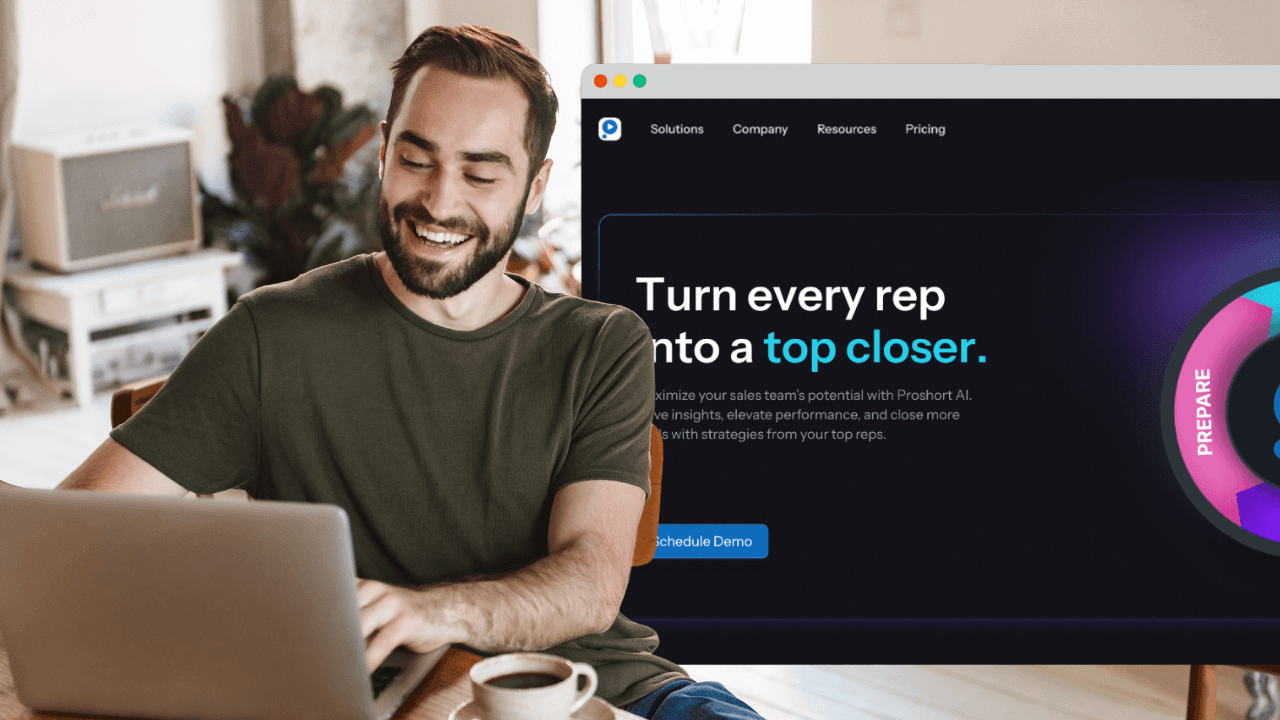
6. Proshort — Best for Sales Execution Coaching in Workflow
Proshort takes a different approach than traditional sales AI tools.
Instead of focusing only on recording calls or generating emails, it helps reps execute better during daily work.
That includes:
Contextual coaching before meetings
Smart CRM workflow guidance
Rep readiness support
Consistency across teams
Visibility into execution gaps
Reinforcement after training programs
Many sales orgs don’t fail because reps lack tools. They fail because execution varies rep to rep.
That is where Proshort becomes especially valuable: helping managers scale best practices without constant manual oversight.
Best for:
Sales enablement teams
Managers scaling consistency
Teams struggling with CRM adoption
Rep onboarding and everboarding
7. ZoomInfo Copilot — Best for Data + Buying Signals
ZoomInfo combines large B2B data sets with intent signals and AI recommendations.
Best for:
Enterprise outbound
ABM motions
Territory planning
Best AI Sales Assistant Tools by Use Case
If You Need More Pipeline Fast:
Apollo.io
ZoomInfo
Salesloft
If You Need Better Forecast Accuracy:
Salesforce Einstein
Gong
If You Need Better Rep Coaching:
Gong
Proshort
If You Need CRM Discipline:
Proshort
Salesforce Einstein
If You Need Fastest Time-to-Value:
HubSpot AI
Apollo.io
What Features Matter Most in 2026
When evaluating vendors, prioritize these:
1. Workflow Fit
If reps hate using it, adoption dies.
2. Data Quality
Bad data + AI = faster bad decisions.
3. Manager Visibility
Leaders need insight, not dashboards nobody checks.
4. Rep Enablement
Does it make sellers better?
5. Automation Depth
Can it truly remove work?
6. Revenue Impact
Does it improve win rates, speed, or forecast confidence?
Common Buying Mistakes
Buying “AI” Instead of Solving a Problem
Ask what pain you’re fixing:
Low pipeline?
Poor CRM hygiene?
Weak coaching?
Bad forecasts?
Slow onboarding?
Ignoring Adoption Risk
Complex tools often underperform because reps avoid them.
Overloading the Stack
Sometimes one strong platform is better than five disconnected tools.
What the Future Looks Like
The next generation of AI sales assistants will become proactive.
Instead of waiting for reps to ask questions, they’ll automatically:
Flag deals going dark
Suggest multithreading strategies
Recommend stakeholder outreach
Simulate objections before calls
Detect forecast risk in real time
Coach new hires continuously
Research in 2026 also highlights growing interest in real-time sales copilots that answer questions live during calls.
Final Verdict: Which AI Sales Assistant Is Best?
There is no universal winner.
The best tool depends on your bottleneck.
If you need call intelligence → Gong
If you need CRM-native AI → Salesforce Einstein
If you need prospecting speed → Apollo.io
If you need structured engagement → Salesloft
If you need SMB simplicity → HubSpot
If you need execution consistency and coaching at scale → Proshort
The smartest B2B teams in 2026 are not asking:
“What AI tool is hottest?”
They are asking:
“Where do we lose revenue—and which AI assistant fixes that fastest?”
That’s the question that drives ROI.