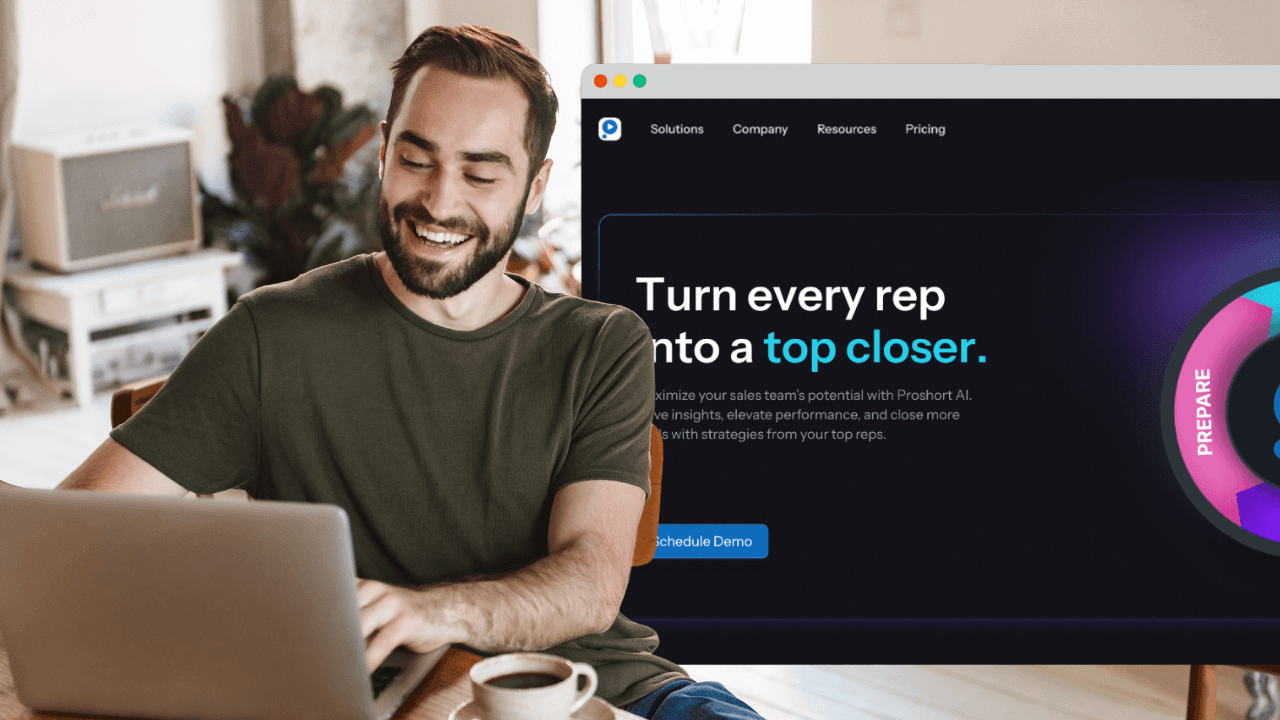
It is 2026, and the "Information Age" of sales has officially ended. We have moved into the "Execution Age," and yet, most Go-To-Market (GTM) teams are still trying to win modern enterprise deals using tools designed for a world that no longer exists.
If you are a sales leader today, you are likely looking at a dashboard filled with "Activity Metrics." You see plenty of meetings on the calendar, plenty of recorded calls in your conversation intelligence library, and plenty of "intent signals" in your CRM. But your win rates are stagnant, and your sales cycles are stretching into infinity.
The problem isn't your people, and it isn't your product. The problem is your meeting tools.
Legacy meeting platforms—the Zooms, Teams, and Google Meets of the world—were built to be digital cameras. They were designed to transmit video and audio from Point A to Point B. They were "passive observers." In 2026, relying on a passive observer to win a complex, multi-stakeholder enterprise deal is like bringing a disposable camera to a high-speed Formula 1 race. You might capture what happened, but you won't do anything to influence the outcome.
Outdated meeting tools are actively destroying your team’s sales demos because they create an "Execution Gap"—a massive distance between your GTM strategy and the actual human-to-human interaction where the deal is decided. Here is why the "Digital Camera" era of sales is over, and why your team needs an execution engine.
The Passive Observer Problem: Why Recording a Failure Doesn't Fix One
For the last few years, we have been told that "Conversation Intelligence" (CI) was the holy grail. We recorded every call, indexed every transcript, and gave managers a dashboard to see who was talking too much. But in 2026, we’ve realized a hard truth: Recording a failure doesn’t prevent one.
Legacy tools are "post-mortem" by nature. They tell you why you lost a deal three days after the buyer has already moved on to a competitor. They are digital graveyards of missed opportunities. If your reps are walking into demos relying on a tool that only records what they say, they are walking in alone.
Modern sales is a human-to-human sport filled with messy buyer committees and political shifts. You don't need a tool that tells you that you fumbled an objection on Tuesday; you need a system that prepares you to nail that objection on Monday afternoon. This is the shift from Observation to Execution.
The Administrative Tax: The Hidden Cost of the "Meeting Hangover"
The single biggest killer of sales performance in 2026 is the Administrative Tax. The average B2B salesperson spends nearly 30% of their week on non-selling activities. Most of this time is consumed by the "Meeting Hangover"—that hour after a demo spent summarizing notes, updating CRM fields, and drafting follow-up emails.
Outdated meeting tools leave the "work" to the human. They record the call, but they leave the rep to do the manual labor of translating that call into business data. This creates a vicious cycle. Because the rep is drowning in admin, they have no time to prepare for their next meeting. They show up to the next demo "winging it," fumbling the discovery, and creating even more administrative work for themselves.
Proshort is your Supercoach because it starts by killing the Administrative Tax. Its Assistant layer automatically captures every meeting and turns it into high-quality, executive-level summaries and automated CRM updates instantly. When your reps reclaim 8–10 hours per week, they finally have the headspace to be tactical. They move from being data-entry clerks back to being high-impact sellers.
Single-Threading and the "Phantom Stakeholder" Risk
In the enterprise world of 2026, the "single-threaded" deal is a death sentence. The average purchase now involves between 6 and 12 stakeholders. Your rep might be having a "great" conversation with a champion, but legacy meeting tools are blind to the people who aren't on the call.
Outdated tools can't tell you that the CFO hasn't opened your last three proposals. They can't tell you that the Head of Security—who usually vetoes deals in Stage 4—hasn't been invited to a single discovery session. These are "Phantom Stakeholders," and they are the number one cause of "Closed-Lost" deals in 2026.
An execution engine like Proshort uses an Agent layer to monitor the entire buyer committee. It unifies context from your calls, your CRM, and your email threads to identify who is leaning in and who is ghosting. It doesn't just flag a risk; it recommends the specific tactical move to re-engage the missing decision-maker. It ensures your reps are multi-threading the deal by default, not by accident.
The Contextual Readiness Gap: Why "Generic" Training Fails
Most GTM strategies fail because they rely on generic training. You send your reps to a "Discovery 101" workshop or give them a PDF battlecard for a competitor. But when they are in a high-stakes demo with a skeptical buyer, that generic training evaporates.
In 2026, the winner is determined by Contextual Readiness. Outdated tools provide a library of content; modern engines provide Meeting-Ready Preparation.
Proshort is your Supercoach because it unifies the context of the specific deal. It traverses the "Sales DNA" of your organization—learning from past wins and losses—to provide a battle plan for the next meeting.
The breakthrough in 2026 is Contextual AI Roleplay. Before a rep walks into a high-stakes demo, they can rehearse their discovery thread and objection handling against a simulation of the actual buyer committee they are about to face. They don't practice against a generic "Persona"; they practice against the specific objections that have been raised in this deal. They "fail" in the flight simulator so they can win in the boardroom.
The Death of the "Hero Culture" and the Rise of Repeatable Excellence
For years, sales leaders have relied on "Hero Culture"—the idea that 20% of your reps will carry 80% of the quota because they have an intuitive "feel" for the room. In 2026, this is a massive business liability. If your best rep leaves, your "Sales DNA" leaves with them.
Outdated meeting tools do nothing to capture the "logic" of your top performers. They just record the audio. An execution engine, however, encodes that intuition into the system. It learns the patterns of your winners—how they handle pricing, how they navigate technical hurdles, and how they build trust—and distributes that logic to the rest of the team.
This turns your B-players into A-players. It ensures that even a new hire can walk into a demo with the tactical confidence of your top 1%. It moves your organization from "Random Acts of Greatness" to a System of Repeatable Excellence.
Why 2026 Revenue Leaders are Moving to the Supercoach Model
If you are still using a tool that requires you to "go to the library" to find an insight, you are losing revenue. The fastest GTM engines in 2026 treat meetings as Execution Events.
The return on investment (ROI) for this shift is no longer theoretical.
DomainTools reported a payback in under 30 days and an 800%–1400% Year-1 ROI because they moved past "recording-only" tools. Their reps showed up better prepared, leading to higher win rates and shorter cycles.
Vitable Health used Proshort to deploy 15+ custom agents, turning their meeting data into automated workflows that handle everything from forecasting to handoffs.
Increff describes the experience as an "enablement dream" because coaching is grounded in actual customer conversations, not generic theories.
If your administrative burden is high and your preparation is generic, your execution gap is wide. You win in 2026 by using Proshort to flip the equation—reducing the burden and maximizing the prep.
Reclaim Your Quota and Win the Human Moment With Proshort
Deals in 2026 are won in the human moments—the surprise objections, the subtle stakeholder pivots, and the trust-built discovery. If your reps are walking into these moments supported by outdated, passive meeting tools, they are being set up for failure.
Stop treating your sales demos as "calls to be recorded." Start treating them as high-stakes execution events that require a Supercoach.
Proshort provides the Assistant to reclaim your time, the Agent to execute your work, and the Supercoach to win the meeting. We unify your calls, your CRM, and your content into a single blueprint for GTM success.
[Book Your Proshort Demo Today]
Frequently Asked Questions
1. How does Proshort save 8–10 hours per week for reps?
Proshort kills the "Administrative Tax." Our Assistant layer automatically generates meeting summaries, follow-up drafts, and CRM updates (Salesforce, HubSpot, etc.). Reps stop being data-entry clerks and start being sellers.
2. Why is "Contextual AI Roleplay" better than traditional sales training?
Traditional training is generic and forgotten within 30 days. Proshort's roleplay is deal-specific. Reps rehearse against a simulation of the actual stakeholders and objections they are facing in their live pipeline today.
3. What are "Phantom Stakeholders"?
They are the decision-makers (like Finance or Security) who stay behind the scenes but have the power to kill your deal. Proshort’s Agent layer monitors engagement across the entire buyer committee to identify these risks early.
4. Does Proshort replace tools like Zoom or Microsoft Teams?
Proshort integrates with your existing meeting tools to turn them into execution engines. It takes the "passive" audio and video from those calls and applies the "active" Supercoach layer of preparation and automation.
5. How does encoding "Sales DNA" help my team?
It eliminates "Hero Culture." By learning from your top 1%, Proshort distributes winning tactics and logic to the entire team, making your GTM performance repeatable and predictable.