Most sales technology is built for after the fact. Call recordings reviewed days later. CRM fields updated hours after the conversation ended. Coaching delivered in a weekly 1:1 based on data that is already stale.
Real-time AI sales guidance flips this model. The intelligence arrives during the conversation — when it can actually change the outcome.
The Problem With Post-Call Analysis
Post-call analysis is valuable. But its fundamental limitation is that it cannot help you win the deal that happened this morning.
When a rep mishandles a pricing objection on a Tuesday call, the manager might review the recording on Thursday and provide coaching on Friday. The prospect has already moved on — or moved to a competitor.
Real-time guidance addresses this by making the right information available at the right moment: during the call, not after it.
What Real-Time AI Sales Guidance Actually Does
Listens to the Conversation in Real Time: The AI transcribes and analyzes the conversation as it happens. It identifies topics, detects objections, recognizes competitor mentions, and tracks conversation flow — all within seconds.
Surfaces Relevant Content Without Being Asked: When a prospect says "we are also looking at your competitor," the AI immediately surfaces your competitive battle card. When pricing comes up, it surfaces approved pricing guidance. When an objection pattern is detected, it surfaces proven responses.
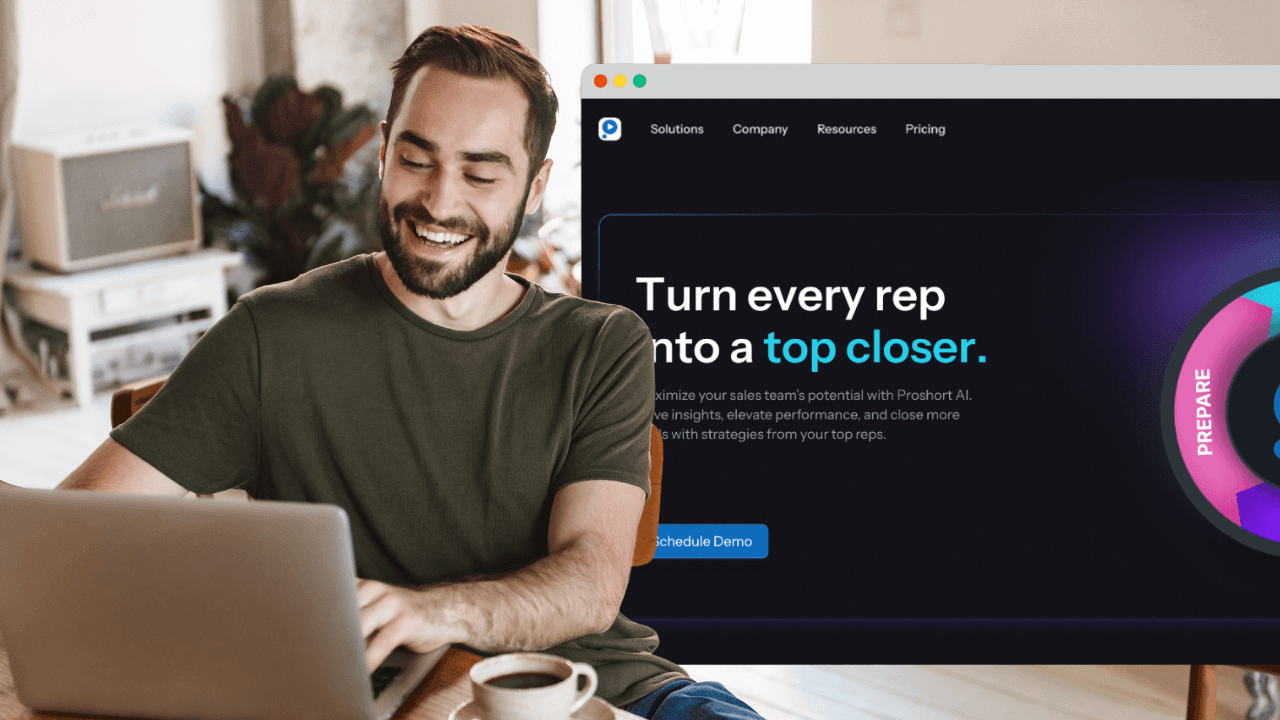
Proshort's Super AE engine does exactly this — running continuously in the background during live calls, ready to surface the right content the moment it becomes relevant.
Keeps the Rep Focused on the Human: The best real-time AI tools are designed to be peripheral, not distracting. The rep stays present in the conversation. The AI provides a quiet signal when something relevant is detected. The rep glances at the suggestion, uses what is helpful, and continues the conversation.
This is fundamentally different from a rep frantically searching a shared Google Drive for a battle card while a prospect waits.
The Anatomy of a Real-Time AI-Guided Call
Before the call: The AI reviews CRM data, previous conversation history, and any relevant account information. It surfaces a pre-call brief with key context.
Opening minutes: The AI listens as rapport is established, identifying topics the prospect cares about and flagging areas of potential interest.
Discovery phase: As the prospect describes their challenges, the AI identifies relevant use cases and flags them for the rep.
Objection handling: When specific objection patterns are detected — price, timing, competitor, internal champion — the AI surfaces pre-built responses.
Close: The AI tracks commitment language, flags when next steps are not clearly established, and reminds reps of agreed-upon follow-up items.
Post-call: Automatic summary, action items, and CRM updates with no manual documentation required.
Why Real-Time Guidance Matters More for Some Teams
New Reps: New reps lack the pattern recognition that comes from thousands of calls. Real-time AI guidance gives them access to the collective knowledge of your best reps, live, on every call. Studies consistently show that new reps with AI-assisted onboarding ramp significantly faster.
Complex Products: When a product has multiple modules, pricing tiers, and use cases, it is nearly impossible for reps to have all the relevant information memorized. Real-time guidance means reps can speak confidently about any part of the product without hesitation.
Competitive Markets: In markets where prospects are evaluating multiple vendors simultaneously, the rep who can handle competitive objections clearly and confidently wins more often.
Distributed and Remote Teams: When managers cannot sit next to reps and provide live coaching, real-time AI fills that gap. It is like having your best sales manager virtually present on every call.
What Good Real-Time AI Guidance Looks Like in Practice
A rep is on a 45-minute discovery call with a VP of Sales at a mid-market SaaS company. Twenty minutes in, the prospect says: "We are also evaluating Gong for this."
Without real-time AI: The rep knows Gong is a competitor but has to recall competitive positioning from memory. They might undersell their differentiation or inadvertently validate the competitor.
With Proshort's real-time guidance: Within two seconds of the mention, a battle card appears in the rep's interface. It shows the three key differentiators, with specific language that resonates with VP-level buyers. The rep addresses the comparison immediately and confidently.
The call progresses differently. The rep appears more knowledgeable. The prospect's confidence increases. The deal advances.
Measuring the Impact of Real-Time Guidance
Teams implementing real-time AI guidance typically see improvements across:
First-call-to-demo conversion rate: Reps handle objections better in early conversations, advancing more prospects.
Competitive win rate: Better handling of competitive mentions leads to more wins against key competitors.
Call confidence scores: Reps self-report significantly higher confidence when they know they have AI support.
Ramp time: New reps reach full productivity faster when they are not dependent on memory alone.
Call quality consistency: The gap between top performer and average performer narrows significantly.
Common Concerns About Real-Time AI Guidance
"Won't reps become dependent on it?" The same concern was raised about GPS navigation. Yes, you rely on it — but your driving outcomes improve. Real-time AI guidance builds habits and exposes reps to better response patterns over time.
"What if the AI suggests something wrong?" Modern systems like Proshort surface suggestions, not scripts. The rep chooses whether to use the suggestion. Systems learn what works and improve their recommendations over time.
"Will prospects know reps are using AI?" The interface is visible only to the rep. From the prospect's perspective, the rep simply seems knowledgeable and well-prepared.
Conclusion
Real-time AI sales guidance represents a fundamental shift in how sales conversations happen. Instead of training reps to memorize perfect responses and hoping they surface at the right moment, you build a system that makes the right information available at the right moment — every time.
The result is not a robot-like sales conversation. It is a more confident, more informed, and more effective human sales rep.